
Diversity, equity, and inclusion (DEI) are becoming increasingly important goals for companies that recognize the benefits of having a workforce that represents a wide range of backgrounds and identities. As an employer or hiring manager, it’s important to understand the impact that your recruitment process can have on creating a truly diverse and inclusive work environment. In this blog post, we’ll be discussing the importance of retaining external recruitment partners in order to achieve an inclusive hiring process.
Why Retaining External Recruitment Partners Matters
Speed is often a priority in the recruitment process, but it can come at the cost of diversity. Briefing multiple recruitment agencies at once can create a race that may disadvantage candidates from underrepresented backgrounds. By retaining external partners, you’re giving them the chance to fully evaluate their talent pool, advocate for candidates who may not be able to operate at the same speed as the rest of the pool, and challenge biases without fear of not meeting commercial goals.
As a hiring manager or employer, it’s essential to have a clear understanding of what diversity means for your company and to take specific actions to improve representation and inclusion for underrepresented groups. A part of this is embracing a partnership with your recruiters where you align on the goals of the business.
By retaining your external recruitment partner, gives both parties the time and space to fully evaluate their talent pool before submitting candidates, they are more likely to be able to advocate for those who may not be able to operate at the same speed and pace as the rest of the pool. This allows them to challenge biases and disrupt the status quo, without fear of not meeting commercial goals.
It’s important to remember that diversity means different things to different businesses. As a hiring manager, be specific about where you need to improve representation and be transparent about what you’re doing to improve your DEI mission. And, as a recruiter, don’t accept “diverse” as a vague or coded term. Instead, ask questions about the company’s specific diversity goals and the areas where they are underrepresented or overrepresented. This information can be valuable in helping underrepresented candidates understand the company’s DEI mission and determine if it’s the right fit for them.
Inclusive Hiring
In order to achieve an inclusive hiring process, it’s important to set clear goals and continuously review and improve your DEI strategies. This requires a business-wide cultural shift towards DEI, and the involvement of everyone, including leaders and recruitment partners. By partnering with agencies that are committed to diversity and inclusion, you can build a more diverse, equal, and inclusive work environment that benefits everyone.
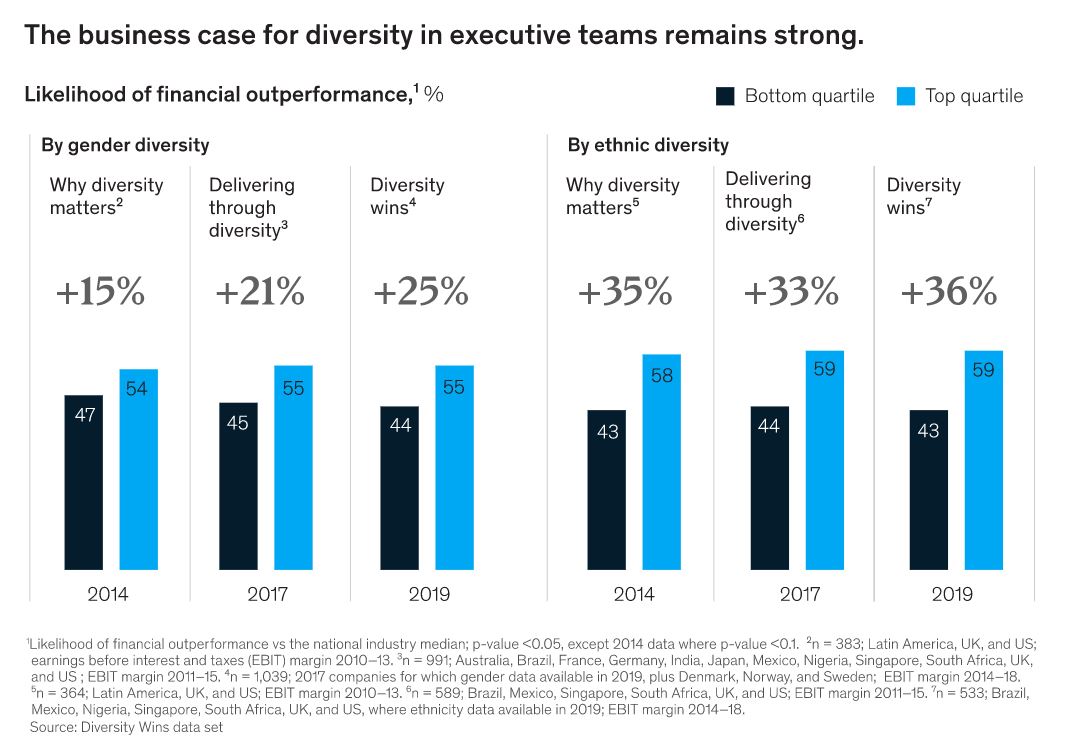
According to McKinsey, companies with more ethnically diverse executive teams are 36 percent more likely to outperform on profitability, and companies with gender diverse executive teams are 25 percent more likely.
Monitoring and evaluating progress is crucial for companies to assess their success in achieving their diversity, equity, and inclusion (DEI) goals and making meaningful changes towards a more inclusive work environment.
Regularly monitoring and evaluating progress helps build accountability and transparency, ensuring that everyone in the organization is aware of the progress being made and what still needs to be done to achieve DEI goals. Ultimately, monitoring and evaluating progress is critical for organizations to stay on track towards creating a diverse, inclusive, and equitable workplace for all employees.
Here’s 7 steps you could take to monitor progress
- Regularly collecting and analyzing data on the diversity of their workforce, including demographics such as race, gender, sexual orientation, and disability status.
Surveying employees to understand their experiences and perceptions of the company’s DEI efforts, and using the feedback to identify areas for improvement.
Engaging in regular DEI training and education for employees and leadership, and tracking participation and engagement.
Conducting an annual DEI audit or review, which assesses the company’s policies, processes, and practices related to DEI, and identifies areas for improvement.